
Brazil may be known as a popular vacation destination for its beautiful beaches and tropical weather, but it is also home to a bustling community of discrete mathematicians promoting a particularly ‘magical’ field: combinatorics. Among them is ISTA alum Walner Mendonça, who now teaches as an assistant professor at the Federal University of Ceará in his hometown of Fortaleza.
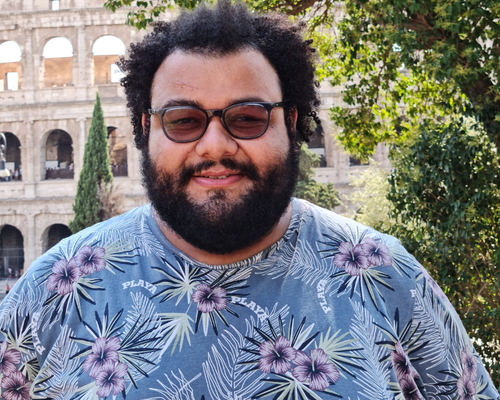
Combinatorics focuses on combinations and arrangements of finite structures, which were just like complicated puzzles to Walner. “The problems are easy to understand, but the solutions can be really hard, and the techniques can feel almost like magic.” Walner had studied and researched exclusively in Brazil through his PhD and was looking to gain experience in a different setting. At the same time, Matthew Kwan was setting up his research group at ISTA. “The pandemic had made finding positions and securing visas quite challenging. Matthew is a pretty well-known guy in the combinatorics field and when he reached out to my PhD advisor about an open position, I jumped at the opportunity.” In just two months, he was heading North of the equator to ISTA to join the Kwan group as its second member and first postdoc.
Though Austria and Brazil are in different hemispheres, Walner did manage to stay connected to Brazilian culture not too far from campus. “When I first arrived at ISTA, I was temporarily living on campus and would often go to this pizzeria on the weekends by myself. There was a group of locals who I would often run into and it turns out they knew some Brazilian songs.” The group asked the owner to change the music on the speakers, and in a small restaurant in the hills of Klosterneuburg, they would sing Brazilian songs into the night.
He spent the next year at ISTA working intently on combinatorics problems and techniques, learning as much as he could in this new environment before ultimately heading back to Brazil. As an assistant professor, it is his goal to open the doors of combinatorics to new students and to expand the reach of the field. “There is a somewhat large community of combinatorics professors in Brazil working in São Paulo, Rio de Janeiro, Fortaleza, Salvador, and a few other cities and regions. These classes are often electives, and we work hard to make the field more accessible and excite students about its possibilities.”
Walner is one of several organizers of an annual combinatorics conference in Brazil, which will be held in Fortaleza this year. “We really want to attract new students and try to make it easier for them to attend.” He and other organizers find and apply for grants to cover the registration fee for students and offer financial support to those traveling from further parts of the country. It is his goal for others to feel the same magic he feels in his work. “I love academia a lot and really hope that more will see combinatorics as a field they can pursue and enjoy.”
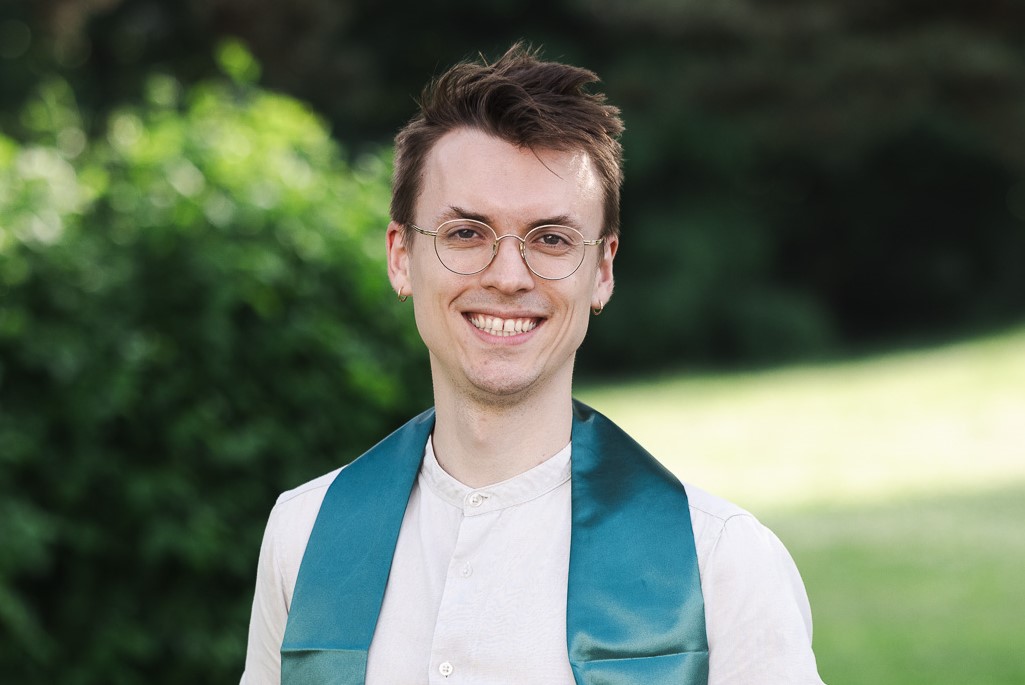
UNIVERSITY OF ZURICH, ZURICH, SWITZERLAND
Morris Brooks graduated from the ISTA Grad School in 2023. During his time at the Seiringer group, he studied quantum systems involving large numbers of particles and their collective behavior. In 2021, he was the lead author on a paper on a new way of creating anyons, strange quasi particles, using rotating molecules, possibly aiding efforts to constructing a new kind of quantum computer. He was awarded the Outstanding PhD Thesis Award for his work at ISTA. He has since moved to the University of Zurich to continue his academic career.
Watch the corresponding video on YouTube
My name is Morris Brooks. I do not have an up-to-date business card, but I would describe myself as a mathematician working in research.
When I finished high school, it was pretty clear that I wanted to have a career in academics. But at that time I didn’t know if I wanted to do mathematics or physics. I decided for mathematics, which I do not regret. But it was really at ISTA where I could finally unify my passion for those two subjects.
I do aspire a career in academia. Especially, I want to use the things which I’ve learned here at ISTA and propagate them further. I think I won’t be happy outside much.
It was here at the Institute where I figured out what kind of research I want to do, and I cannot overestimate the impact it had on my career.
For me, the most ordinary days here have been the most treasured memories. I go in the morning to the duck pond and take my breakfast and maybe go to lunch with the whole group afterward. And, you know, if I get stuck in my work in the afternoon, maybe I go for a walk in the hills of Klosterneuburg. I found that very relaxing.
I think I have two good advices. The first thing is: I think what sets ISTA apart from other institutes is the interdisciplinary aspect. It is really draining to work outside your own field or outside your comfort zone. But I think it is very rewarding. And the second thing is: When you get stuck in your work, I think you should just stop what you’re doing and go outside. The nature here is beautiful. You should really enjoy it.
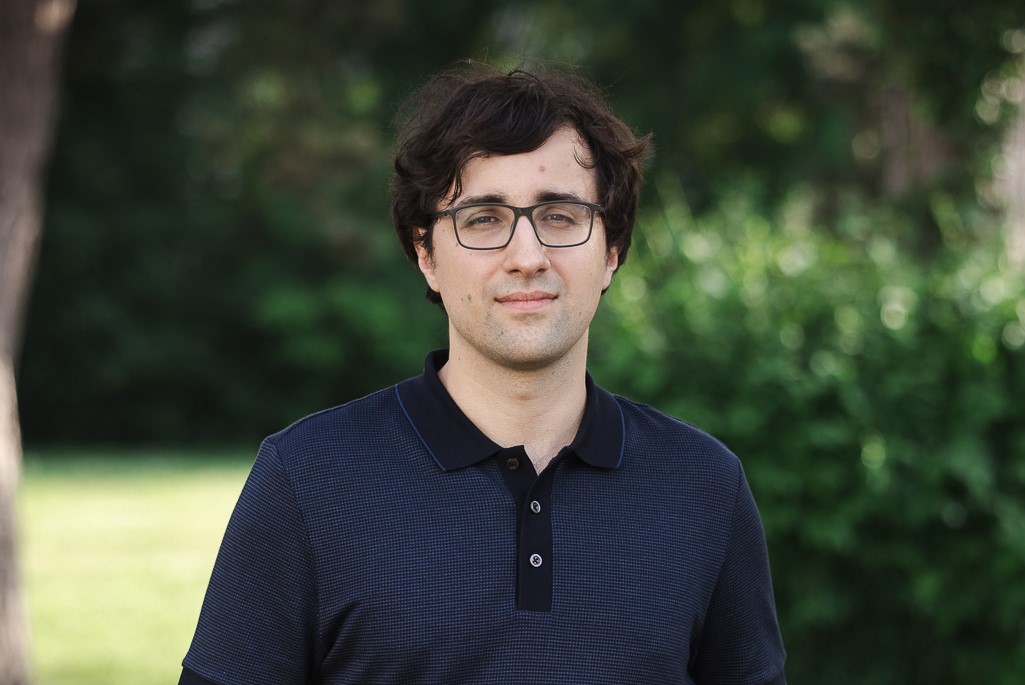
GOOGLE RESEARCH, ZURICH, SWITZERLAND
What the future can hold for excellent PhD students after graduating from ISTA can be seen by the example of Alexander Kolesnikov. During his PhD at ISTA, Kolesnikov focused on the design of computer systems that can automatically learn to parse and understand visual information, like images or videos.
He received his doctorate in 2018, is currently working at Google Research in Zurich, and has now received the 2022 ISTA Alumni Award, given to excellent former researchers of the Institute.
Watch the corresponding video on YouTube
My name is Alexander Kolsenikov. Actually, I don’t have a business card. But if I happen to make one, it will say: Computer Vision and Machine Learning Researcher at Google Deepmind.
It is actually very similar to the typical postdoc position. So, I happen to come up with some new research projects and then execute these projects together with my colleagues, submit the research to conferences, travel there, and I also happen to participate in internal projects inside Google as well.
I did my education in Moscow before coming here. I was mostly focused in applied mathematics and computer science. And when coming here, I decided to specialize in machine learning and computer vision.
ISTA played a very important role in my career. When I first came here, I had some fundamental education, but I didn’t have many research skills. Most of the research skills that I have now, I actually acquired them at IST Austria.
I have a lot of nice memories of doing sports together with my ISTA colleagues. I used to regularly play football, frisbee, do climbing, or even some competitive programming.
Maybe the first advice is to prioritize mental and physical health. Sometimes life in academia can be quite stressful and it’s very easy to get carried away and forget to take care of yourself. The second advice I would give is just to talk a lot with people around you, with your colleagues, and also with external collaborators. It can be very helpful in hard to predict ways. Maybe you get a new research idea or get unstuck. Or it may help you to find a new job after you decide for example to stop working in academia or finish your PhD. The third advice is to be very critical of the advices you get. I think everybody’s situation is very different, and no matter from who you hear the advice: be very critical and aware that it may not apply to your situation.
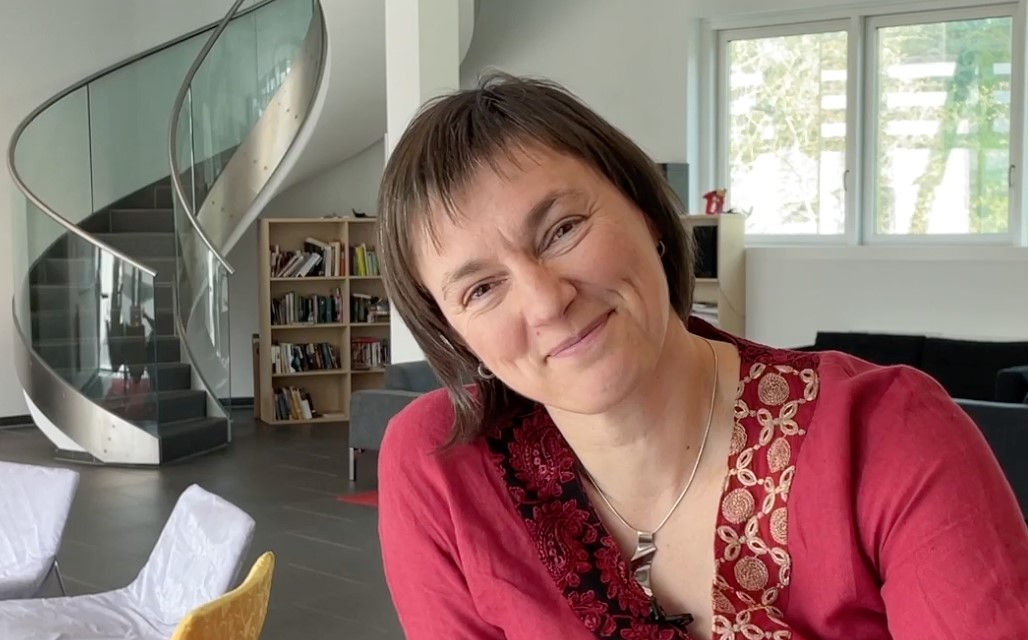
UNIVERSITY HOSPITAL BASEL, SWITZERLAND
Janina Kowalski was a Postdoc in the Jonas group. She now works as a neuroscientist, psychiatrist, general practitioner, and trauma-therapist in Basel, Switzerland. In April 2022 she visited the ISTA campus to take a walk down memory lane and answer some questions about her work and career.
Watch the corresponding video on YouTube
Well, I’m taking care of people, enabling them, helping them find themselves, to find a better way of living their lives, even if they have had serious troubles in the past.
Well I started off as an MD. Then I did a PhD in neuroscience and I was basically working on patch-clamp recordings in the brain. First, in Freiburg im Breisgau and then I moved with my postdoc lab to the ISTA.
I see myself in the future indeed continuing that work but going even more into experimental approaches and into research mostly focusing on trauma therapy.
Well I could dive deeper into basic science techniques and the thing I cherished the most here was the connection between different groups from different fields. Not only from neuroscience. That was very inspiring for me.
Well, the nights on the bridge during late focused research times. Chatting to other people from other labs. These were quite amazing.
Follow your ideals and your heart and your brain. Don’t pick only one. And talk about yourself, talk about troubles, look for other people, who might want to listen. And: Don’t let yourself get distracted by what the global opinion is. Do your thing. Stay true to yourself.
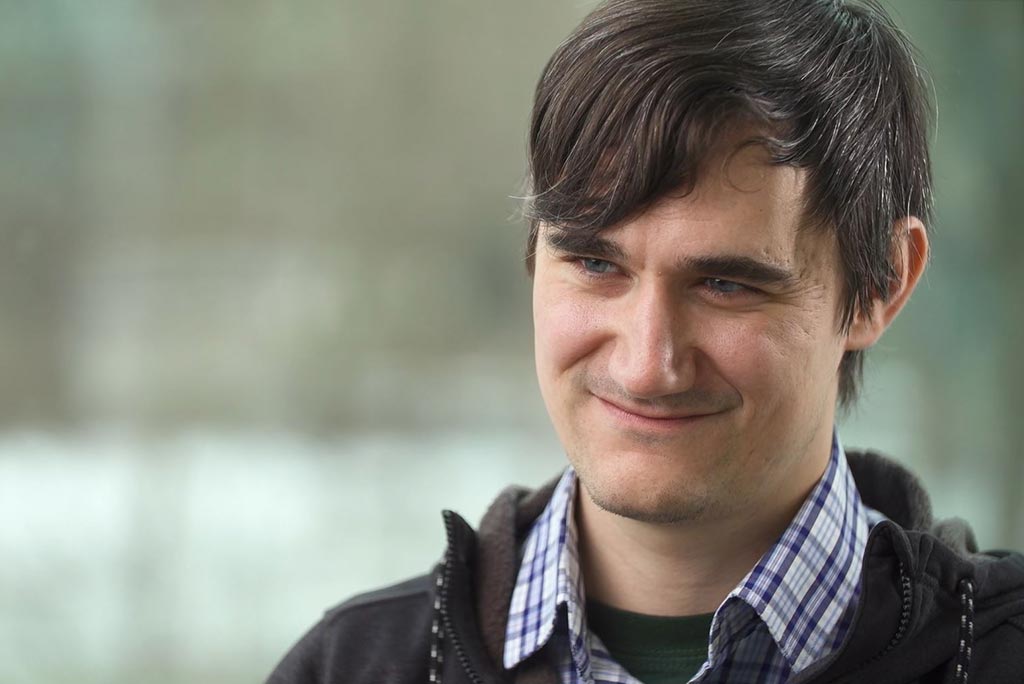
MAX PLANCK INSTITUTE FOR EVOLUTIONARY ANTHROPOLOGY, LEIPZIG, GERMANY
Harald Ringbauer was a PhD student in the Nick Barton group. He is now a group leader at the Max Planck Institute for Evolutionary Anthropology, Leipzig. In January 2021 he visited the IST Austria campus to take a walk down memory lane and answer some questions about his work and career.
Watch the corresponding video on YouTube
My business card right now says group leader at the Max Planck Institute for archaeogenetics in Leipzig, and I actually adjusted to get a new business card. Because up until now, I was doing a postdoc at Harvard, at the Harvard Medical School. I will actually keep my affiliation. So it will be a pretty cool business card.
I’m an archaeogeneticist, which means that we get DNA from human remains who lived 1000s of years ago. And then, we look at how people moved around, how they’re related, and their social structure. So we try to get insight into past movement into past mobility into past patterns, how we live together. The coolest thing is that you really get fascinating insights of people who lived like 1000s of years ago, and it’s still mind-boggling for me. For instance, Ötzi: We have his whole genome, and you can really see to whom he is related and how he came there. We can see from which group he was if his parents were related. So, the coolest thing about my job is that you really get fascinating new insights into who these past people were.
The limitations are that, when we look at the human past, this is often a very emotionally very loaded topic. So often, even when you don’t even think about it. When we only tell stories about past movements or stories about ancestry. People with certain agendas try to take these results and make an argument out of them. So you always have to be careful not to step on anyone’s toes, and also to present it in a very sensible way.
Totally in science. So normal will be for five years at the Max Planck Institute as a group leader. I hope to see myself in five years in Leipzig. And then beyond that: a career in science. Actually, long run, I like humans. They are very interesting for doing ancient DNA. But now we can also do ancient DNA on animals and dogs, on horses, and so on. So that would actually go full circle for the PhD doing genetic analysis, and I want to stay in that kind of topic.
In my bachelor’s and master’s, I did mathematics and physics at the University of Vienna, so actually very abstract. And then only at the IST, I came, I became more interested in actually population genetics, where you can actually apply these mathematical tools to population genetics, and then became more and more interested in actual data analysis. And so, in the US, I really dove deep into archaeogenetics. That’s actually a very interesting story. Because before I started, I was actually thinking: history or mathematics. Because actually, I had a big interest in human history. But I chose mathematics. And I would not have guessed that, actually, by choosing to study mathematics, I would end up with an academic position in archaeology and human history. And it’s really funny to see like this way of quantitative thinking and like this modeling is now actually very useful in really like figuring out, really old big archaeological questions about the human prehistory and also now about human history.
It was the first time I came into contact with world-class population genetics. I was really lucky to have my supervisor Nick Barton, who is like a world-renowned expert, and I really came into contact with bleeding-edge science, like meeting the experts in the field. I got really good training in that and a lot of expertise. Up until now, I think this is the skill set and the network. I think that it is absolutely the key to my career.
The first piece of advice is: Don’t listen to advice. Go your own way. It’s like sciences. There are many aspects. It’s different for anyone, like it’s different per field it is different per character. There are actually many paths to success, and everyone has to find their own way, tailored to their own strength.
But then the second one, you should actually listen to that one: hard work and patience. It’s often not easy in science. You have to keep going. Everyone has good and bad days. It’s totally normal to have bad days, but persistence is important.
The third one is: don’t forget to have fun. You have to find a good balance. It was really good to play table soccer and getting everything out of the system. Most of us are not robots, and most of us, you know, work best when we have a good balance.
Great moments were certainly coming to the bridge after lunch and seeing everyone, my cohort, my international group of friends, having fun on the bridge having fun talking. So many fun moments: Playing table soccer, going to the sauna! All our retreats! Just sitting outside on the balcony. Coming back here to IST, it’s actually all coming back to me. Actually, I am thinking of doing another PhD at IST. 😉
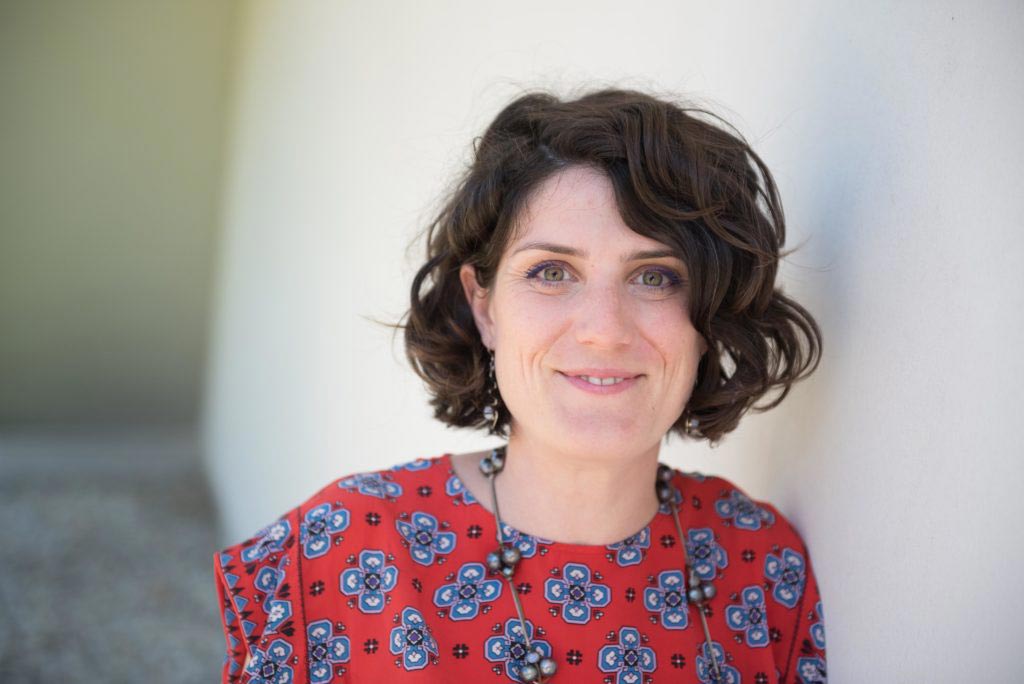
GENENTECH, USA
Christine Moussion was a Postdoc at IST Austria. She now works as a group leader for Genentech in Califonia. At IST Austria Christine Moussion was in Michael Sixt’s group.
In an interview with Daniela Klammer and Kathrin Pauser which took place during the Science and Industry Day 2018 she answered some interesting questions about her work and how her career developed.
Watch the corresponding video on YouTube
On my business card is my first name and my last name, my position: I am a scientist in cancer immunology at Genentech in San Francisco, my address and my phone number. 😉
I lead a research team in a big pharma company I work in basic science and in the same time I lead 3 to 4 people in the basic science and at the same time I do some drug discovery at the same time. I think the coolest thing about my job is it is all about science. Basic science or applied science so to develop new treatment and also that there is no limitation. So we can do whatever we want in term of support facilities money so I think it is really to have great science and great support.
In the future I think I will go where the science will bring me. All I have worked for now is where I am happy to work on and I hope I can contribute to the development of new treatment for disease and at the same time make great basic science discoveries. And have fun in science.
I trained as a bioengineer in biotechnology and I worked for a short time in a start up in drug development. Then I came back to university because I decided to step back and to learn a new field which was immunology which I got very passionate about. So I did a PhD in immunology and a postdoc at IST Austria in Michael Sixt’s lab. I worked at the migration of leucocytes and developed a new bio imaging technic and assets that I can now apply in my current job. So I looked at immune cells recruitment in tumor and how to stimulate the recruitment of this leucocytes to improve cancer immune therapy.
IST Austria gave me the freedom to explore science the edges of science of my field like working at the interfaces between immunology and bio imaging for example. The platform of bioimaging is amazing and is always stimulating the progress, the development of new techniques. My mentor played the biggest role. He gave me freedom and he gave me support in terms of looking for jobs by connecting with his network and confidence.
IST was my first international experience. So I learned English here because I came from France. So now that I am living in the US the Americans say that I am speaking with a German accent. I am not sure about that I think I still have a strong French accent. Here I connected with a different type of culture and a different kind of science, really multidisciplinary, so I connected with Mathematicians or physicists and that’s what I liked at IST.
If I rely on my experience I would say: follow the science. See where the science will bring you. But take action you are the actor of your career. You have to make decisions if you need to step back if you need to change direction. You have to keep being proactive. Work hard surely for papers. Papers can get you everywhere. Go to conferences, connect to the leaders in your field to see where your field is moving and it’s also easier if you want to work in industry if you already know people working there. So if people know you and they know your way of thinking and the science you want to develop it is easier to get in later on. Chose a good mentor, a supportive mentor is crucial for a great future job.
I have two probably. When I was living in the guest house and also later I was able to cook French recipes and I was able to share French food with my colleges and I could learn recipes from different cuisine like Indian and I loved that a lot. And I also loved the postdoc retreat when we were going to the mountain for skiing. I think that were the two moments where I connected and I made really good friends, really strong connections. So that is probably my favorite moment at IST.
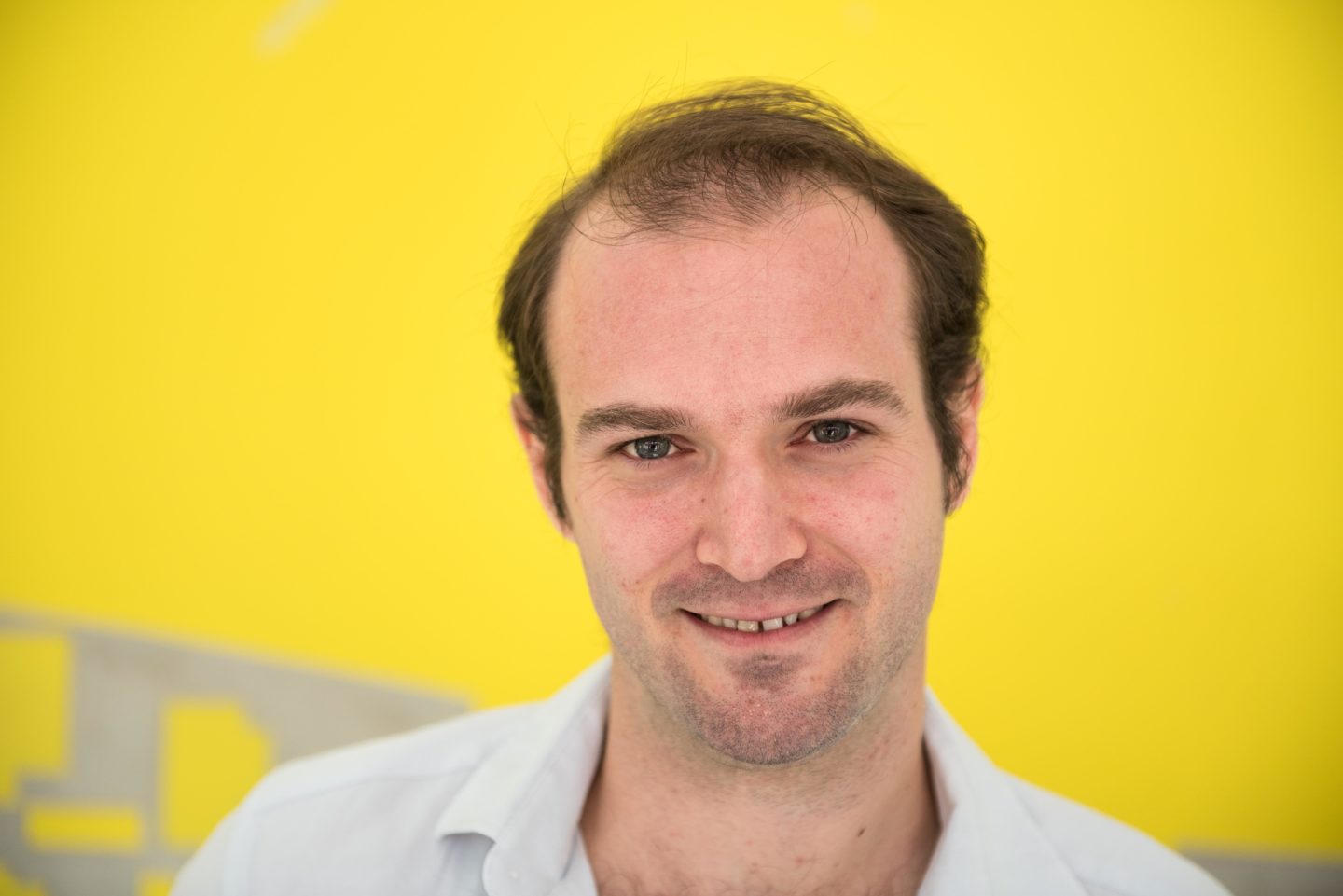
MAX PLANCK INSTITUTE FOR INTELLIGENT SYSTEMS, TÜBINGEN, GERMANY
Michal Rolinek was a PhD student at IST Austria. He now works as a postdoc at the Max Plank Institute for Intelligent Systems. At IST Austria Michal Rolinek was in the Kolmogorv Group.
He returned to campus as a speaker at the Science Industry Day 2018 and found the time to give an interview and answer some interesting questions about his work.
Watch the corresponding video on YouTube
I don’t have a business card but if I had one it would say that I am a postdoc at the Max Plank Institute for intelligent systems.
In our group, we are trying to connect new methods for artificial intelligence and to connect it with the world of robotics. And the coolest thing is that we have a whole floor of robots.
I don’t have a particular plan right now. Luckily we live in the days where there are amazing opportunities for computer scientists so I will just wait and see where they take me.
I got my master’s degree in Prague in mathematical analysis and here at IST, I got my PhD in theoretical computer science.
IST played a massive role for my career. I am really happy to say that the opportunities that I have right now are nothing I was imagining three or five years ago and if you told me I would not have believed it.
One, learn as much as you can about as much as you can. I think that IST is a great place for learning no matter which position you are holding here.
Two, be compassionate the academic environment can be very pressurizing and stressful and the sources of stress can be often different for different people so it is hard to relate. Care for the wellbeing of your coworkers and they will do the same for you.
Three, do it for the joy. I think that joy is the best motivation to do science or to do anything really.
I have had so many great memories. I had a great time in our office and playing football great time at retreats. But if I were to pick one it was the few boxing matches I had in the lecture hall.
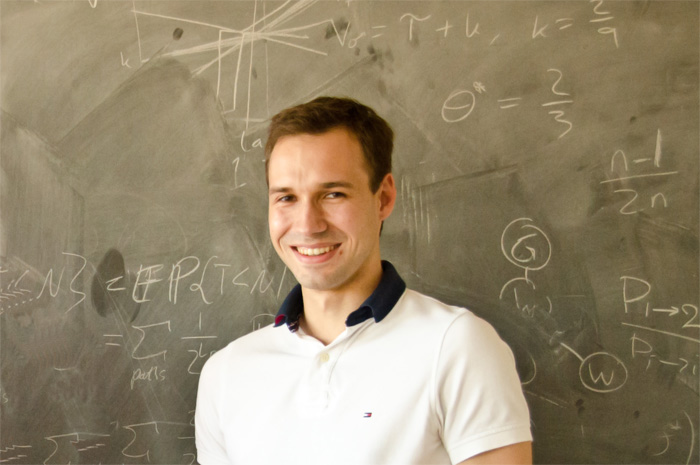
MY RESEARCH LIES AT THE INTERFACE OF COMPUTER AND BIOMEDICAL SCIENCES AND FOCUSES ON THE STOCHASTIC PROCESSES UNDERLYING EVOLUTION. I DEVELOP COMPUTATIONAL METHODS TO LEARN FROM LARGE-SCALE BIOLOGICAL DATA SETS AND BUILD MATHEMATICAL MODELS TO EXPLAIN OBSERVATIONS ON A MECHANISTIC FASHION.
MOST RECENTLY, I FOCUSED ON INFERRING THE EVOLUTION AND THE SEEDING OF METASTASES IN PANCREATIC CANCERS.
Johannes Reiter returned to campus in Fall 2018 to give a special Think and Drink and to share his research with the current campus community. He also found time to do a video interview with us.
Watch the corresponding video on YouTube
I don’t really have a business card but if I had one it would say Johannes Reiter instructor at the Canary Center for Cancer Early Detection at Stanford University School of Medicine.
The coolest thing is that I can work on a globally really important disease. I work on tumors and specifically tumor evolution. I try to approach this problem from a mathematical perspective I try to come up with a quantitative framework that can describe the evolution of cancer.
In the future, I still want to be at the interface of multiple fields like computer science, biology and medicine. I also want to do research in academia perhaps also together at a medical school or a hospital and work together with various researchers from these various disciplines.
My background is in computer science, originally I actually did computer engineering. Then I did computer science at the Technical University in Vienna. When I came to IST I wanted to stay in computer science but I kind of got into theoretical biology and towards the end, I got more into cancer evolution and combining data analysis and mathematical modeling.
IST played a really important role in my career because before I started here I saw myself as an engineer and not as much as a scientist. But then when I started my PhD here I got introduced into so many different areas and I got interested in areas outside of computer science and outside of computer engineering. And that is also the most interesting thing about my job currently. That I can work with experts from various different fields and that keeps my job interesting.
My advice would be: think critically and deeply, try to become independent and ask your own questions, very early on in your career. And perhaps do an internship in industry so you have a good comparison between research that is happening in academia and research that is happening outside of academia.
My favorite memory of IST are definitely all the table soccer games which we played for a lot of time basically every day after lunch.
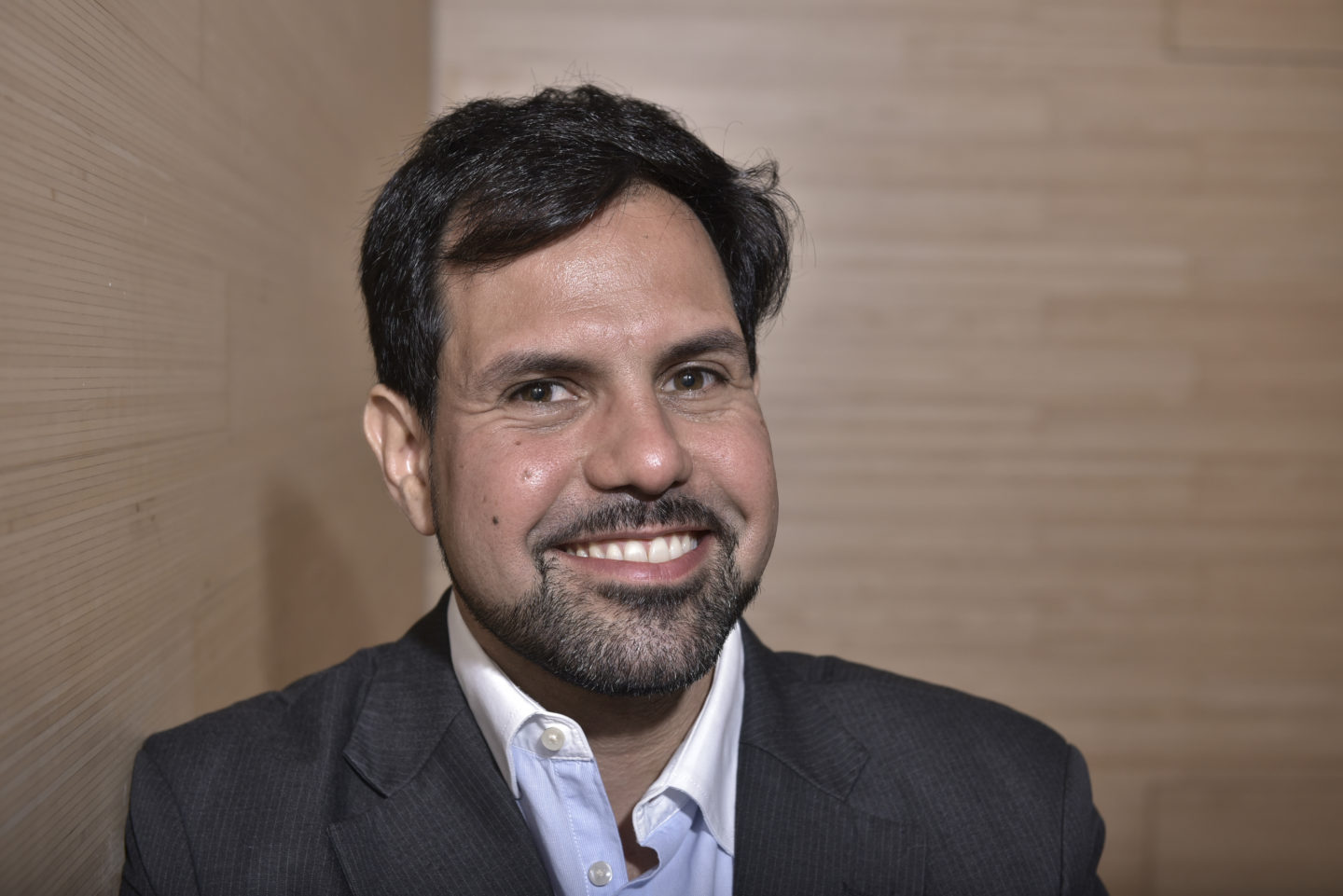
Harold de Vladar was at ISTA from 2009 to 2013 as a postdoc in the Barton Group. He is now CEO and founder of Ribbon Biolabs GmbH. In an interview with Daniela Klammer and Kathrin Pauser which took place during the Science and Industry Day 2017 he talks about what he likes about his research but also about his career and about his time at ISTA when the institute was still very small.
Harold de Vladar, my position: CEO and the name of my startup which is Ribbon Biolabs GmbH.
The essence of my job is to develop the technology to secure the IP of the technology and also to consolidate and make sure that the team is on a good track to develop the technology.
The limitations is that once you start with your own startup you have less freedom to do other things and when you come from an academic background you are probably excited about so many things and then you find yourself restricted doing stuff that you didn’t want to do in the first place like financial sheets or business plans. Which you have to do but what you want to do is just do experiments and equations’ stuff. The cool thing is that you are working for something that is entirely yours. It’s not like working for an institute for two years and after the two years that’s it. It is money you get and you construct your own stuff so it is yours. You develop it as you want you do exactly what you want it is your decision what you are doing and that rocks.
I want to develop this company obviously and I want to be in a position where I am developing new ideas new products or solving new problems related to science. So tech transfer if you wish but real problems and I want to do things that are a bit non canonical, not the standard things. I know it sounds a bit abstract but biology is very vast. There are many interesting things there that you can actually take and make a product out of it for a specific purpose. This is the things I like to make. I would also like to keep a bit of research going like basic research or more explorative research in order to allow the serendipity factor to come to new possibilities.
It’s a complex one. I started as a cell biologist and statistical physics at the same time. Then went into applied math’s only to get more formal tools to work with my stuff related to genetics and evolution. Then I did my PhD in evolutionary ecology, actually I did my PhD in evolution in a group of evolutionary ecology which is what let me to Nick Barton and that is how I ended up at ISTA. And I also have a degree in art and science which sounds very disconnected to all this but it is not.
First of all the connectivity how I connected to the people here which are now in different places either because they were postdocs or because they were exprofessors from here in some other places this allowed a lot of connections directly or indirectly. That was something very important.
And what was also crucial. Having worked with someone like Nick Barton this was an amazing endorsement. We did great job Nick and I, what we did was awesome. It was not on the side of being extra productive but more on the side of taking very challenging problems and solving them. So it was not like salami slicing papers and that created a very idiosyncratic way of seeing science for me because I always gave more importance to this aspect than to publish many papers something that many universities don’t like.
So ISTA determined my career in these two ways in the way I see it but also which options do I have but not by restricting them but by me realizing what is it what I want to do. I always felt more comfortable in Institutes of advanced studies small places where you can think of new things rather than the big shot universities where people go mad with the latest nature cover and you have to race with them. That’s not my style.
For the postdocs of ISTA: Things have probably changed a lot since I left ISTA but I think there are two levels of things that you have to learn as a postdoc. First of all you have to do your work project as it means of learning maturing etc. but you also have to keep a close eye on what you want and what are the next career steps. You can get very distracted with your project and forget that there is a future that you have to fulfill. And I saw many postdocs forgetting these things.
Second, I feel like there is a lot of gab between what is a postdoc and what is a professor and ISTA doesn’t give this feeling of continuity between one and the other. I think at least in my time it was great to be here as a first postdoc but not as a second because you won’t have that much independence you won’t have that much support beyond your project.
I think it was one of these barbeques and we went into the pond, swimming in the pond. I don’t think Tom Henzinger was so happy with us the next day. This was when ISTA was relatively small. We could have staff meetings of the whole institute every week and these meetings didn’t get to more than 20 people. None of the building existed. That was very fun.
Very simple what kind of problems do I really want to solve and how.
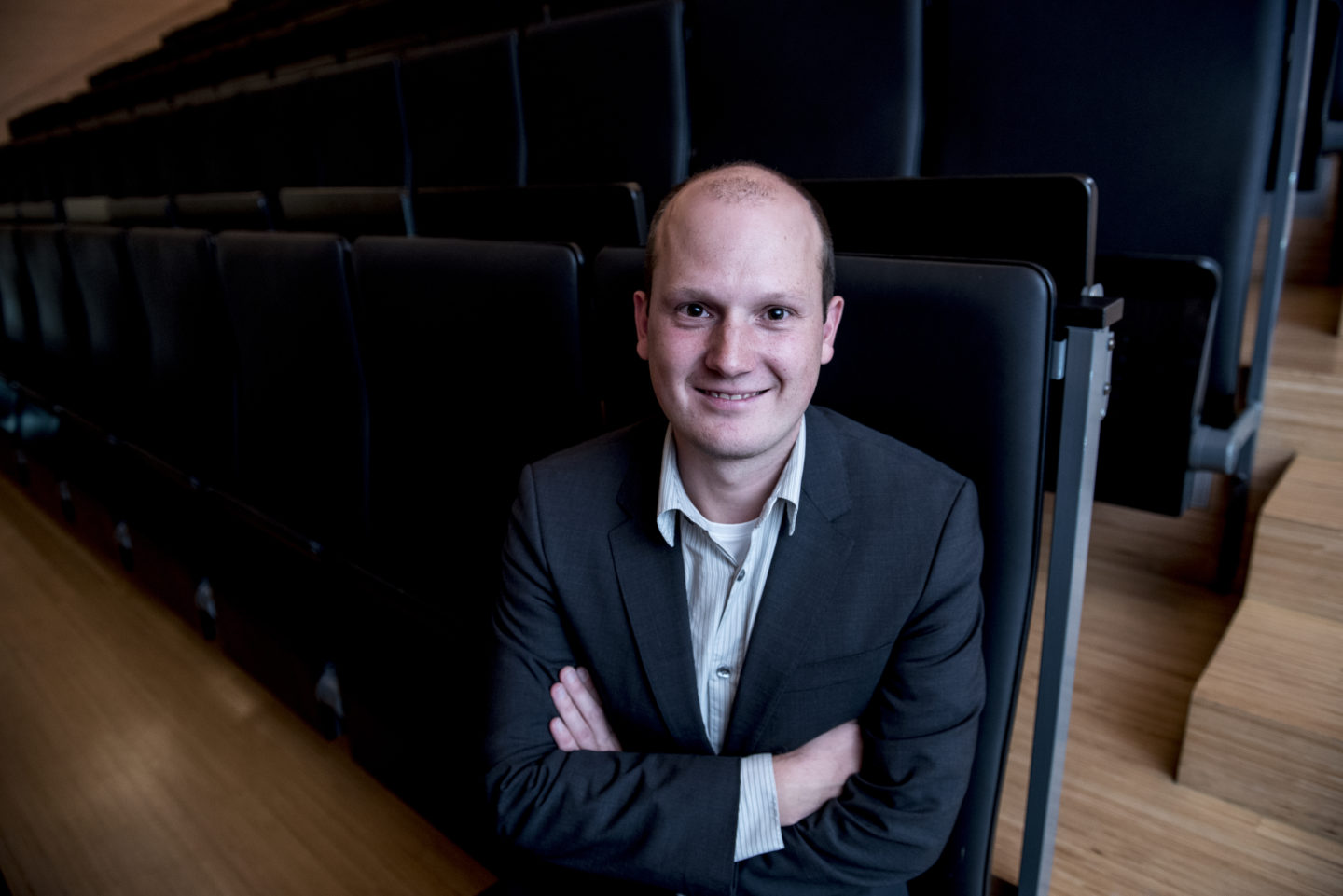
Stefan Huber was at IST Austria from 2013 to 2015 as a postdoc in the Edelsbrunner Group. He is now a researcher at Bernecker + Rainer in industrial R&D. In his interview, he talks about his research but also about his career and about his time at IST Austria.
Stefan Huber, Research and Development
I designed the software concept that means the algorithms, the mathematical models for the next generation industrial transport system of B&R which is called ACOBOStrak.
The coolest thing I think is: It is a very interdisciplinary project. There are bright people from control theory, from mathematics, computer science and together we shape a new kind of technology that could actually change the way industrial machines are built in the future.
I believe that the current R&D project I am working on kind of demonstrates how computer science has a deep impact on industrial automatization. I think this is only a start so in the future I would like to shape a stronger group in the company that focuses on computer science algorithms and mathematics.
My academic background is actually algorithms more precisely it is computational geometry and topology so I have a double degree in computer science and mathematics. I studied in Salzburg I did my PhD in computational geometry and then for a short time I was a senior scientist at the math department. After that I joined Herbert Edelsbrunner’s group at IST Austria for two years in computational topology.
To me IST Austria was intellectually very inspiring. So looking back at IST I see that the experiences that I gained at IST gave me a lot of confidence and trust in scientific principles and that again has an influence in my work because I know that I can trust on scientific methodologies to solve the problems I face in my industry job.
First actively participate in intellectual exchanges.
Try to go to as many workshops and conferences as you can do.
And third use the freedom and opportunities you get from IST Austria. In my case I wasn’t forced to pursue a particular direction in my research. So that’s a nice thing you are completely open. They are very generous when it comes to visiting conferences and there are a lot of scientific visitors to get in touch and to have discussions after a talk when drinking a glass of wine or going to Heurigen.
What I really loved was when there were big visitors like Steve Smale and we went to Heurigen for dinner in the evening and the kind of talks that developed at an evening event are quite different and I enjoyed that very much.