
Cell Biology and Immunology
Biology
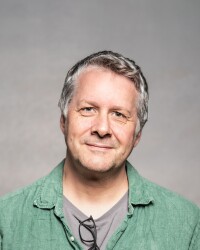
Michael Sixt
Professor
1 Career
- Since 2013 Professor, Institute of Science and Technology Austria (ISTA)
- 2014 – 2024 Executive Vice President, Institute of Science and Technology Austria (ISTA)
- 2010 – 2013 Assistant Professor, Institute of Science and Technology Austria (ISTA)
- 2004 – 2010 Group leader, Max Planck Institute of Biochemistry, Martinsried, Germany
- 2002 – 2004 Postdoc, Institute for Experimental Pathology, Lund, Sweden
- 2000 – 2002 Clinical resident, Dermatological Clinic Erlangen, Germany
- 2002 Approbation in human medicine
- 1998 – 2001 Dissertation (MD), University of Erlangen, Germany
1.1 Selected Distinctions
- 2025 Visiting Fellow, Trinity College Cambridge
- 2024 Elected Member Academia Europaea
- 2021 Elected Chair Gordon Conference Cell Migration
- 2014 Elected EMBO Member
1.2 Selected Grants
- 2023 – 2029 Pushing from within, ERC SynG: Control of cell shape, integrity and motility by cytoskeletal pushing forces; coordinator M. Sixt (ISTA); awarded overall € 9,813,625; to RG: € 2,516,000.
- 2023 – 2027 ImMuNet: Decoding the Immunological Microtubule Network, SNF Sinergia, to RG: € 483,000.
- 2023 – 2026 The role of polysialic acid in T cell immunity, FWF DFG Research Group, to RG: € 324,000.
1.3 Tech Transfer (Patents, Spin-Offs)
- 2017 Device for guided cell activation (EP3282254A1, licensed to Ibidi)
1.4 Selected Publications
- J. Renkawitz et al., “Nuclear positioning facilitates amoeboid migration along the path of least resistance,” Nature, 2019; DOI: 10.1038/s41586-019-1087-5.
- Reversat et al., “Cellular locomotion using environmental topography” Nature, 2020; DOI: 10.1038/s41586-020-2283-z.
- F. Gaertner et al., “WASp triggers mechanosensitive actin patches to facilitate immune cell migration in dense tissues” Developmental Cell, 2022; DOI: 10.1016/j.devcel.2021.11.024.
- J. Alanko et al., “CCR7 acts as both a sensor and a sink for CCL19 to coordinate collective leukocyte migration“, Science Immunology, 2023; DOI: 10.1126/sciimmunol.adc9584.
- P. Reis-Rodrigues et al., “Global coordination of protrusive forces in migrating immune cells,” Nature Immunology, 2025; DOI: 10.1038/s41590-025-02211-w.
2 Group Members
- Zane Alsberga, PhD Student since 2022
- Lucia Camerlenghi, PhD Student since 2025
- Isabelle Mayer, PhD Student since 2022
- Theresa Muthspiel, PhD Student since 2024
- Stefanie Weber, PhD Student since 2025
- Mario Avellaneda, Postdoc since 2020
- Philippe Dehio, Postdoc since 2024
- Francesco Di Matteao, Postdoc since 2024
- Reena Kumari, Postdoc since 2024
- Sergio Lembo, Postdoc since 2022
- Ziquiang Li, Postdoc since 2023
- Patricia Rodrigues, Postdoc since 2025
- Ingrid De Vries, Research Technician since 2010
3 Research
The development and maintenance of most multicellular organisms crucially depends on the ability of single cells to actively change their physical shape. They do so in order to move around, ingest targets and make connections with other cells. The Sixt lab studies regulatory principles, how the cellular cytoskeleton generates and transduces forces, how it responds to chemical and physical cues and how these processes are connected to the metabolic state of the cell. The lab mainly investigates cells of the immune system. Immune cells show high shape-plasticity and are very motile in order to execute their protective function, which requires them to quickly access and scavenge damaged tissues. Accordingly, immune cells are unusually autonomous from the biochemical composition of their environment and are not – like other cells – stably embedded in their tissue-context. The Sixt lab discovered that for immune cells, specific interactions with the connective tissue are often weak and that, instead, these cells often use physical cues, like environmental topography or rigidity as a basis to inform and execute their behavior.
3.1 Current Scientific Projects/Directions
- The role of cytoskeletal pushing forces in cellular locomotion
- The role of microtubule coordination in cellular shape-change
- Phagocytic response to target topography
- Metabolic regulation of cytoskeletal activity
- Cytoskeletal regulation of cellular granule-release
- Long-term cellular adaptation of cells to mechanical confinement
- Innate immune cell responses to dynamic forces
3.2 Research in Focus
When migrating through mesenchymal tissues with fibrillar architecture, leukocytes rarely digest or permanently remodel their environment. Instead, they probe their vicinity to sense and select the path of least resistance. To do so they use their frontward-positioned nucleus as a gauge to choose larger pores over smaller ones. We now show that in very dense tissues, where even the largest pores preclude free passage, cells push and laterally displace the surrounding matrix in order to transiently open a path for translocation of the cell body. To this end the cells revert from their usual amoeboid configuration, where the organelles like Golgi and Lysosomes are positioned behind the nucleus, to the mesenchymal configuration, where organelles are positioned towards the front. Associated with organelles we find a central pool of the actin cytoskeleton that responds to mechanical compression and serves to laterally push into the surrounding matrix to transiently dilate a path. This central actin pool communicates with actin at the cell front, which advances the cell body along the longitudinal axis, establishing a system that either creates space for passage or translocates forward. When we specifically delete the central actin pool, cells migrate faster in unrestricted environments because actin at the front is enhanced. In complex 3D environments, locomotion is impaired in the absence of central actin, because passage through constrictions depends on lateral pushing. Moreover, unleashed protrusion at the cell front causes dissociation between leading edge and cell body, visible as actively detaching cell fragments that migrate away from the cell body. We thus establish a new way how the cytoskeleton at the cell body and the cell front coordinate their activity and demonstrate that this coordination is essential for maintenance of physical coherence of the cell.
This work was published in Nature Immunology: P. Reis-Rodrigues et al., “Global coordination of protrusive forces in migrating immune cells,” Nature Immunology (2025)

