September 29, 2026
Double Success for ISTA at the Lower Austrian Science Awards
Honorary Award for Johann Danzl, Recognition Award for Maria Ibáñez
3D-printed thermoelectric materials and expansion microscopy of brain tissue—these are the contributions that earned two researchers from the Institute of Science and Technology Austria (ISTA) distinctions at the Lower Austrian Science Awards. Maria Ibáñez and Johann Danzl accepted their awards at a gala on Tuesday, September 29, 2026, in Tulln. ISTA’s winning streak has continued uninterrupted for four years: since 2023, a total of six professors have received one of the state’s awards.
Honorary Award for Johann Danzl
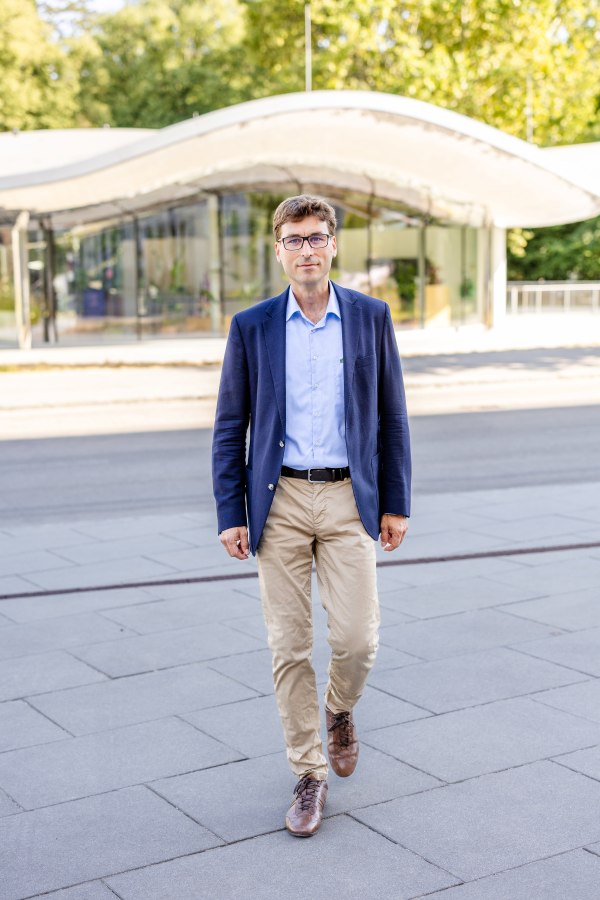
One of two honorary awards goes to Johann Danzl this year. Honorary awards recognize a scientist of supraregional significance for their overall scientific body of work. They are therefore the state’s highest distinction within the framework of the science awards.
Danzl studied medicine and experimental physics and earned his Ph.D. in quantum physics at the University of Innsbruck. After working for several years at the Max Planck Institute for Biophysical Chemistry in Göttingen, he was appointed Assistant Professor at ISTA in 2017. There, he established his research group in the field of “High-Resolution Optical Imaging for Biology.” In 2025, he was appointed Full Professor.
A technology developed by Danzl and his team, LICONN (“light microscopy-based connectomics”) enables brain tissue samples to be magnified 16-fold, allowing researchers to better visualize and thus understand the brain’s structures and synaptic connections. The patented technology was published in Nature and recognized by the journal as one of seven groundbreaking future technologies.
Recognition Award for Maria Ibáñez
One of this year’s four Recognition Awards went to Maria Ibáñez. Recognition Awards are intended to promote scientists who have already gained significant professional standing through their work.
Maria Ibáñez earned her Ph.D. in physics from the University of Barcelona. In 2018, she joined ISTA as an assistant professor and group leader, where she established her research group focusing on inorganic materials from the nanoscale to the macroscale. Since 2020, she has headed the Werner Siemens Thermoelectric Laboratory at ISTA; in 2022, she also assumed the position of VERBUND Professor of Energy Science. In July 2026, she was promoted to Full Professor at ISTA.
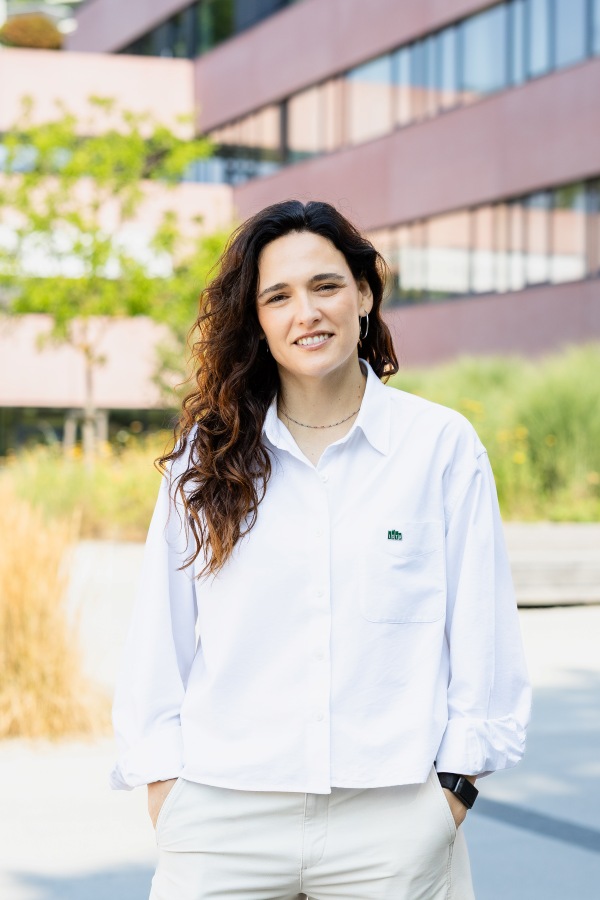
Ibáñez and her team are investigating how nanoparticles can be specifically synthesized and modified to create materials with desired properties. In a paper published in the journal Science, she describes special reactive inks she developed for 3D printing. When heated afterward, the particles form strong bonds with one another. This made it possible to print high-performance thermoelectric materials and use them to create a fully 3D-printed cooler.
Ongoing Success: Previous Years’ Winners
ISTA has enjoyed consistent success at the Lower Austrian Science Awards over the past four years.
In 2025, neuroscientist Sandra Siegert, who has been an assistant professor at ISTA since 2015 and professor since 2023, was awarded a Recognition Prize. She investigates how microglia and neurons interact. Microglia are important immune cells embedded among nerve cells that influence neural communication. Siegert and her team are specifically researching how disruptions in this interaction affect brain function, which can then lead to potential diseases.
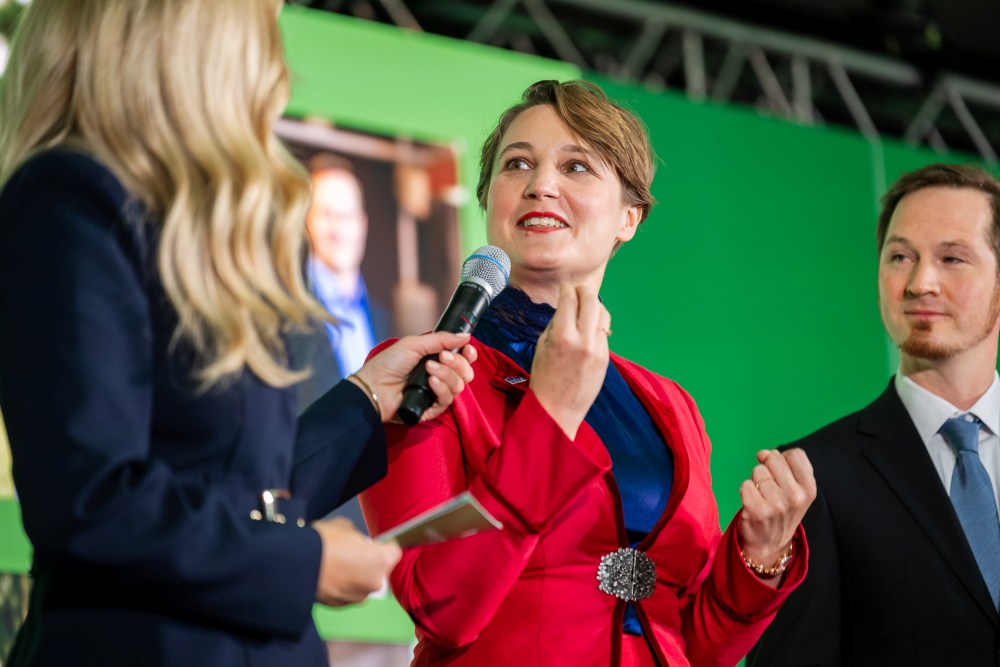
Computer scientist Dan Alistarh, who has been an assistant professor at ISTA since 2015 and a professor since 2022, was awarded a Recognition Prize in 2024 for his research on artificial intelligence (AI). In his work, he explores how “deep neural networks”—that is, large AI programs—can be trained precisely and executed efficiently on affordable hardware and distributed computers.
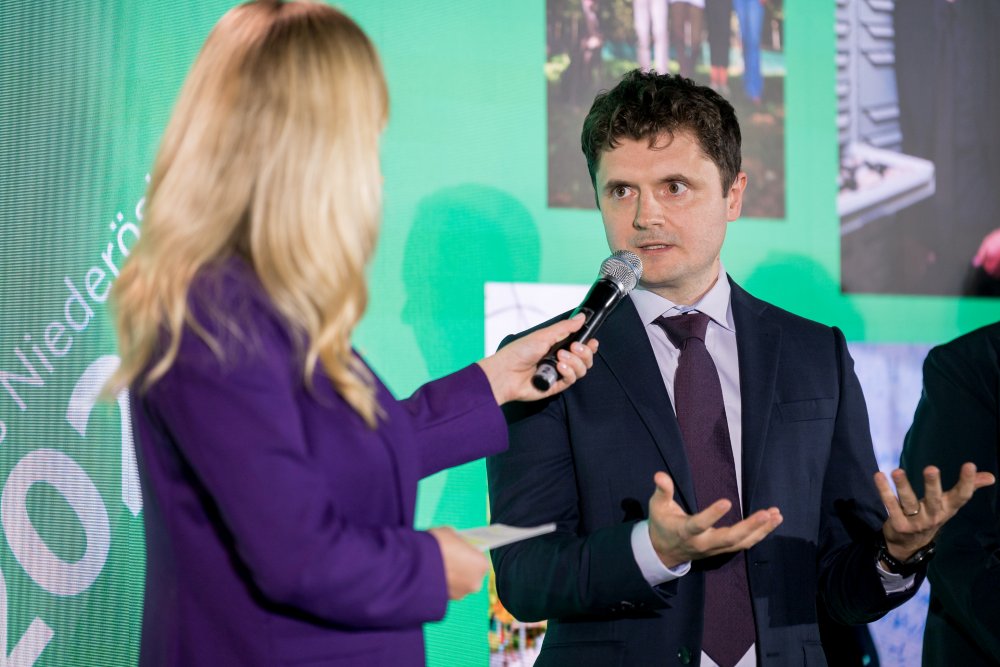
No fewer than three ISTA professors received a state Recognition Award in 2023: Chemist Stefan Freunberger for his research on sustainable batteries, biochemist Leonid Sazanov for his findings on an enzyme in the respiratory chain that is potentially highly relevant to medicine, and theoretical physicist Maksym Serbyn for his work on many-body systems in quantum dynamics with implications for engineering, computer science, and future quantum computers. As early as 2017, Carl-Philipp Heisenberg received the Honorary Award for his research in molecular developmental biology, which already at that time combined approaches from genetics, biochemistry, and physics in an interdisciplinary manner.