
March 9, 2026
New Emerging Fields Project
ISTA Professor Anđela Šarić & colleagues receive FWF grant for pioneering scientific work
The Institute of Science and Technology Austria (ISTA) is part of a new research project funded by the Austrian Science Fund (FWF) with 5.1 million Euro as part of the excellent=austria initiative. Titled “Germline Illuminated by Cellular Structural Biology,” the project investigates the biology of the germline, i.e., the cells from which egg cells and sperm cells originate. ISTA’s Šarić group will play a central role in this project, contributing its expertise in computational modeling to gain a better understanding of the mechanisms of genetic information transfer.
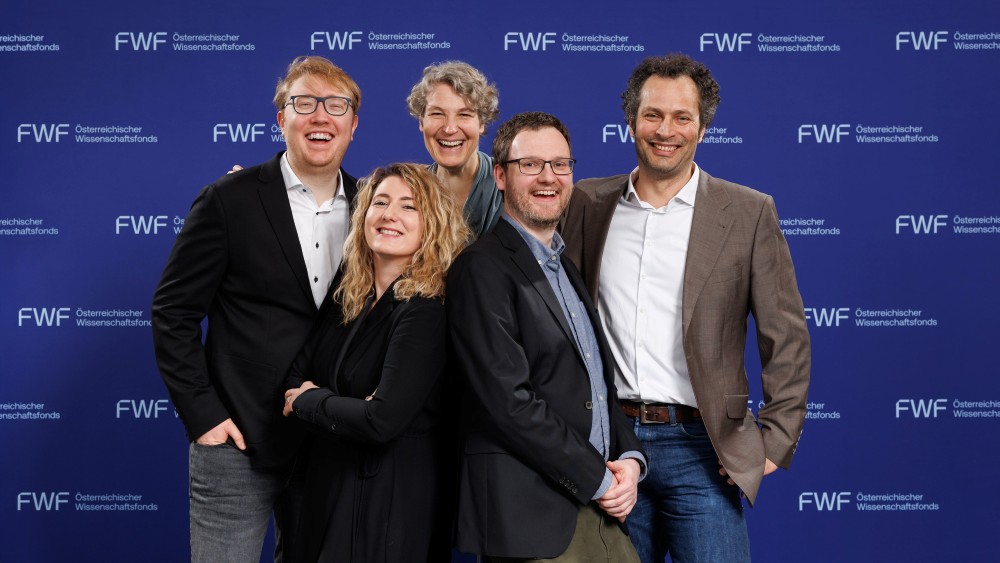
As part of the excellent=austria initiative, the Austrian Science Fund (FWF) is funding six additional Emerging Fields consortia with around 35 million Euro. With their novel approaches, the new projects convinced the international FWF jury that they will unlock fields of research with great innovation potential. The six new consortia announced today bring the total number of Emerging Fields to eleven. In each consortium, teams of up to 30 scientists will work together over a period of five years. They will carry out highly innovative, pioneering scientific work that transcends disciplinary boundaries. The Institute of Science and Technology Austria (ISTA) in Klosterneuburg is also involved in one of the new Emerging Fields.
GEMINI: Understanding the immortality of the germline
Every human being is created from the fusion of an egg cell and a sperm cell. These unique cells originate from the germline – a group of cells that carry the blueprint of life and pass it on in an unbroken chain between generations. The new Emerging Field “Germline Illuminated by Cellular Structural Biology” (GEMINI) – funded with 5.1 million Euro – has set itself the goal of solving a fundamental mystery: How do these cells protect, package, and transmit genetic information? By combining revolutionary high-resolution imaging technologies with computer simulations, the team will look inside these cells to not only observe the biology of the germline, but also to understand its fascinating, yet little-explored, biology.
The team will investigate how germ cells defend themselves against “genetic parasites,” how DNA is packaged in sperm, and how sperm and egg cells fuse to create new life. By studying these processes in fruit flies, zebrafish, and mice, GEMINI will contribute to our understanding of fertility and heredity, and therefore the origin of life itself.

“The germline contains the most important cells in our bodies; without them, we would not be here and our entire species would not exist. GEMINI will shed light on the fascinating biology hidden within these unique cells,” says project coordinator Andrea Pauli, a professor at the Research Institute of Molecular Pathology (IMP). “It will thus serve as a model for the emerging field of ‘Integrated Cell Biology 2.0’ – how the cross-fertilisation of biology and technology can change our understanding of fundamental questions in biology while advancing technology.”
In addition to the IMP (Research Institute of Molecular Pathology) and the IMBA (Institute of Molecular Biotechnology) of the Austrian Academy of Sciences (ÖAW), the Institute of Science and Technology Austria (ISTA) is also involved in the project.
ISTA contributes expertise in computer-aided modeling
ISTA’s research group “Computer-Aided Physics of Soft and Living Matter” led by Professor Anđela Šarić is a project partner and part of the GEMINI consortium. Specifically, Saric and her team will contribute their expertise in the field of computational modeling. They will use their specialized knowledge to gain a better understanding of how the dense packing of genetic material in sperm works and how the subsequent fusion of sperm and egg takes place, which ultimately enables human life.
Furthermore, ISTA professor Florian Praetorius will support the GEMINI team as a cooperation partner—specifically by developing synthetic proteins, thereby expanding the experimental possibilities, especially for species that are not suitable for genetic manipulation.
An overview of all Emerging Fields is available on an online map at excellentaustria.fwf.ac.at.