June 23, 2026
ISTA Secures New ERC Advanced Grant
Prestigious 2.8-million Euro prize will fund SPINSWAP superconductivity project
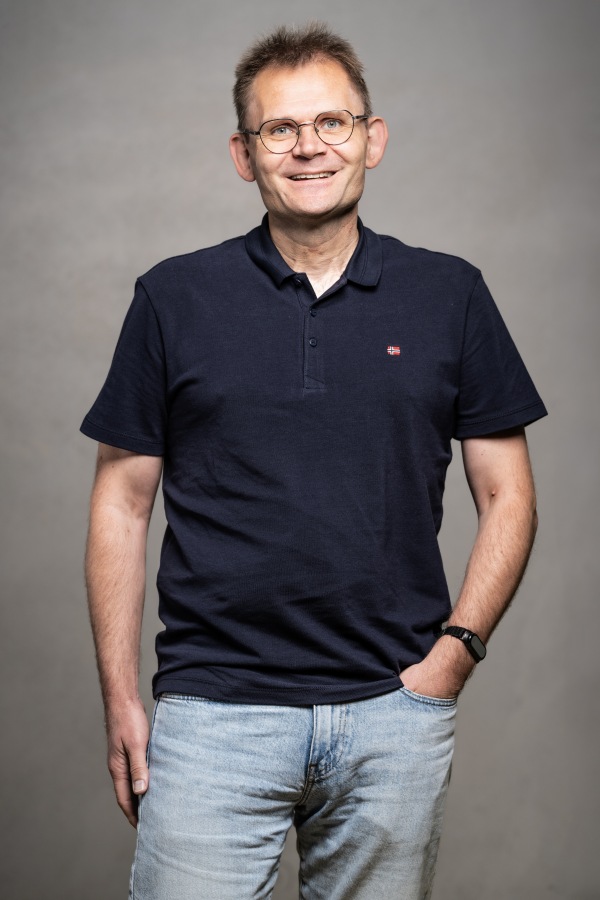
Georgios Katsaros, a professor at the Institute of Science and Technology Austria (ISTA), has won a highly competitive European Research Council Advanced Grant worth 2.8 million Euro for a project aimed at directly observing and harnessing a special quantum connection at the heart of superconductivity. The results could advance understanding of condensed matter physics, a cornerstone of modern technology.
Some materials, such as aluminum, can become superconductors when cooled down to very low temperatures. In this special state, electric current can flow through them without any resistance, meaning no energy is wasted as heat. Scientists explain this using the 1956 BCS theory, which states that superconductivity occurs when electrons start to move in pairs. These so-called Cooper pairs act almost like tiny dance partners, moving together smoothly through the material while avoiding obstacles.
Each pair also links the two electrons’ spins—an intrinsic property of electrons—so that these are always opposite and connected, resembling two spinning tops locked in sync. This link is a form of quantum entanglement, which, for example, is a key resource in quantum computing. Even though this entanglement is a core part of the description of Cooper pairs, no one has been able to directly measure it.
That’s where Katsaros and his ERC-funded SPINSWAP project come in. “During the SPINSWAP project we will make devices that combine superconductors with semiconductors—the main materials in electronics today—to finally see and use this special quantum connection between the paired electrons,” Katsaros says.
Katsaros, who heads ISTA’s nanoelectronics research group, notes the research is important for furthering understanding of the fundamentals of condensed matter physics, which underpins much of modern technology.
“When combining a superconductor with a semiconductor with special properties and adding a magnetic field, the type of superconductivity could change,” he says. “Nobody has directly studied this. Our devices might allow us to go in this direction.”
Katsaros credits group & collaborators
Katsaros, who joined ISTA as an assistant professor in 2016, stresses that the grant celebrates not only the scientific potential of SPINSWAP but also the dedication of his group that tirelessly helped build the foundation for the project.
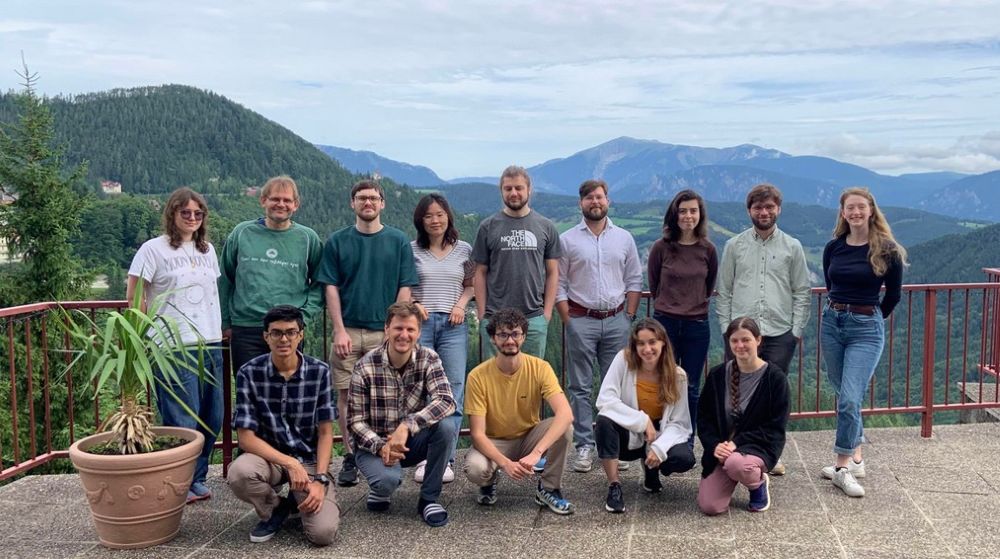
“This ERC grant is a recognition for the endless hours of work interns, students and postdocs have put into developing the technology needed for SPINSWAP. A big thank you to my group for making the proposed experiments possible,” Katsaros says.
“Our research would not be possible without ISTA’s Scientific Service Units, the unique environment at ISTA and all our collaborators.” Katsaros, who describes himself as a Greek-German researcher and also serves as ISTA’s Vice President for Scientific Resources, was awarded an ERC Starting Grant in 2013.
ISTA’s ERC grant success
As a part of the European Union’s Horizon Europe program, ERC Advanced Grants are awarded for a period of five years and enable senior researchers to undertake ambitious, curiosity-driven projects with the potential to achieve significant scientific breakthroughs.
Competition is very tight: A record 3,329 proposals were submitted for this latest call, up 31% from last year, with only 9.6% selected for funding.
Since opening its doors in 2009, ISTA has become one of the most successful research institutions in Europe when it comes to securing ERC grants. While the overall success rate for ERC core grants typically falls between 8% and 15%, ISTA boasts an impressive 49%.
With the most recent award, 78% of ISTA’s professors have now received at least one ERC core grant while 23% have been awarded several, including three professors who have each been awarded three.