
November 12, 2026
Three ISTA PhD Students Receive Google Fellowships
Riccardo Cadei, Jiale Chen and Nikita Kalinin are recognized for their innovative AI research
Three doctoral students at the Institute of Science and Technology Austria (ISTA), Riccardo Cadei, Jiale Chen and Nikita Kalinin, have been named recipients of highly competitive Google PhD Fellowships for their innovative AI research. With European institutions limited to three nominations each annually, the selection of all ISTA applicants this year marks an exceptional success, highlighting the caliber of the Institute’s early-career scientists and the strength of its AI research.
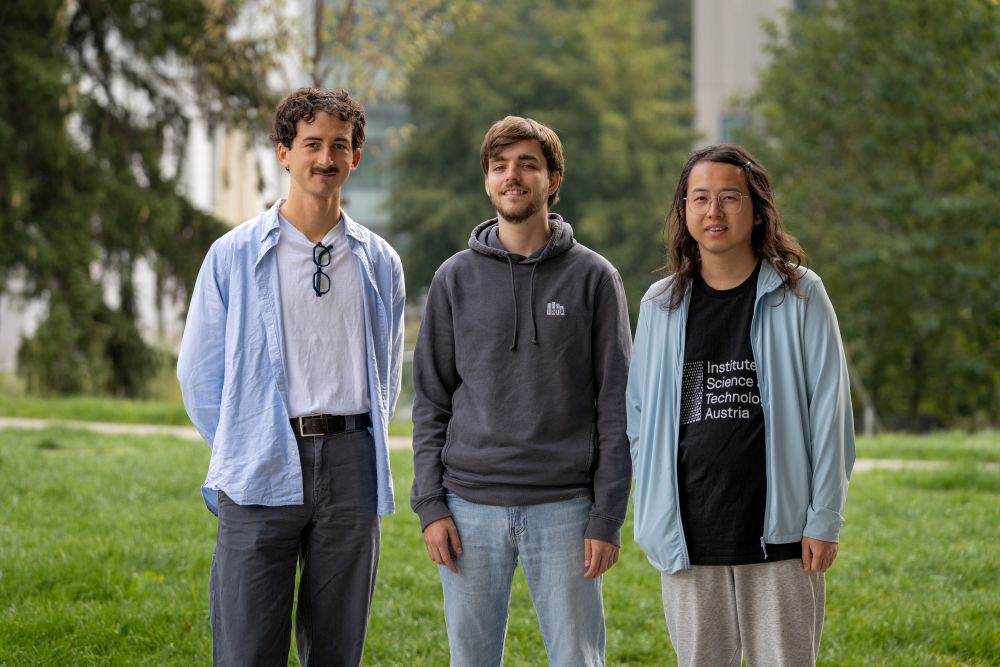
The fellowships recognize outstanding PhD students whose foundational research in computer science and related fields has the potential to shape the future of technology, providing support to help them progress in their work.
Cadei, Chen and Kalinin will each benefit from up to US$120,000 in financial support from Google.org.
While Cadei and Chen are both recipients of a 2026 Google Fellowship in Machine Learning and ML Foundations, Kalinin has been awarded a 2026 Google Fellowship in Privacy, Safety, and Security.
Riccardo Cadei – explaining cause & effect
Cadei, a member of ISTA’s Causal Learning and Artificial Intelligence group led by Assistant Professor Francesco Locatello, develops algorithms and models to identify and explain cause-and-effect relationships from complex measurements in scientific experiments. He collaborates with scientists across disciplines ranging from biology and neuroscience to development economics, exploring, for example, the behavioral effects of genetic mutations linked to autism and why anti-poverty programs benefit some people more than others.
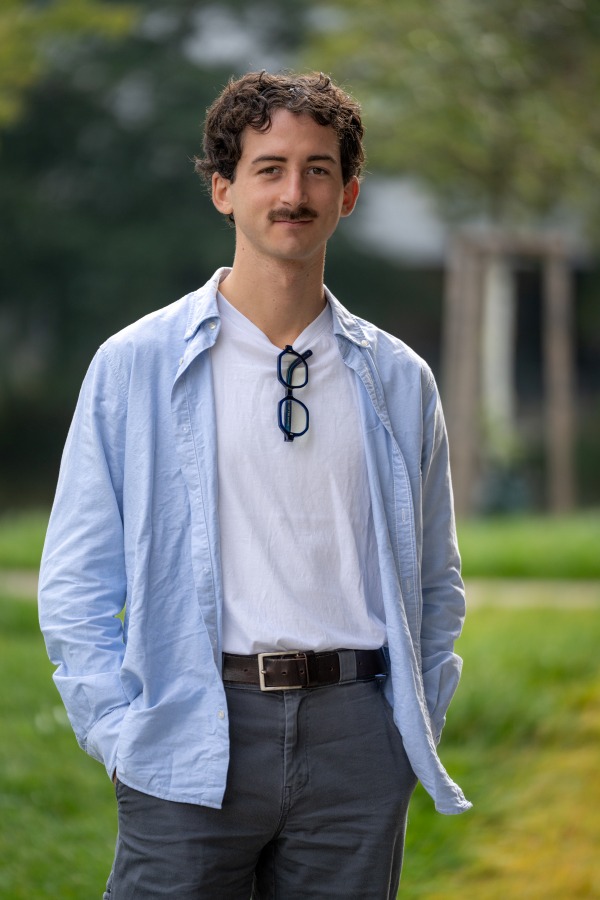
Before joining ISTA in 2024, Cadei studied applied mathematics, machine learning, and causal inference at Politecnico di Milano, EPFL, and Harvard University.
“This fellowship gives me the freedom to tackle more ambitious research questions and pursue scientific discoveries with real-world impact,” he says.
Jiale Chen – making LLMs faster & more efficient
Chen’s research in ISTA’s Deep Algorithms and Systems Lab (DASLab) group led by Professor Dan Alistarh focuses on making large language models (LLMs), the technology behind modern AI assistants, faster and more efficient. These models require enormous amounts of memory and computing power, making them expensive to operate.
Chen develops mathematical methods and efficient algorithms to reduce these requirements while preserving model accuracy. In particular, he works on compressing AI models and accelerating their computations, with the broader goal of making powerful AI more affordable, energy efficient, and accessible.
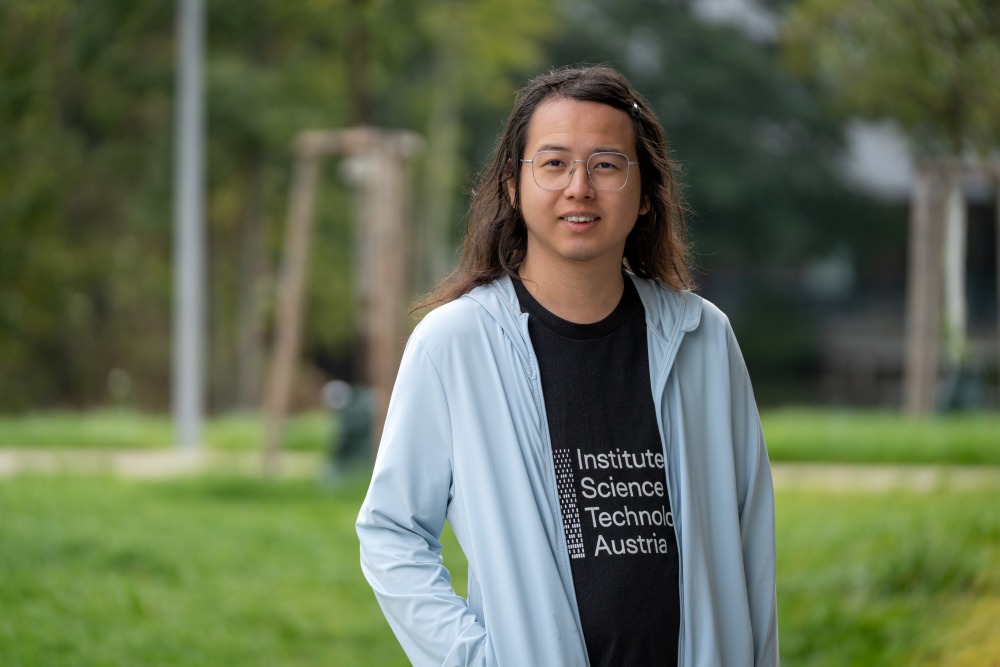
Before joining ISTA in 2023, Chen obtained his master’s from ETH Zurich. He also holds a bachelor’s degree from Wuhan University.
“This recognition is a wonderful encouragement to continue exploring new ideas for making advanced AI more efficient and accessible,” says Chen.
Nikita Kalinin – protecting privacy
Kalinin, who has a background in applied mathematics and computer science, is a fifth-year PhD student in ISTA’s Machine Learning and Computer Vision group led by Professor Christoph Lampert focused on privacy preserving machine learning.
Specifically, he works on developing methods to train AI models while protecting the privacy of users, as well as keeping the models as useful as possible. This research can be used by companies such as Google, which train models on user data, to help protect individual privacy.
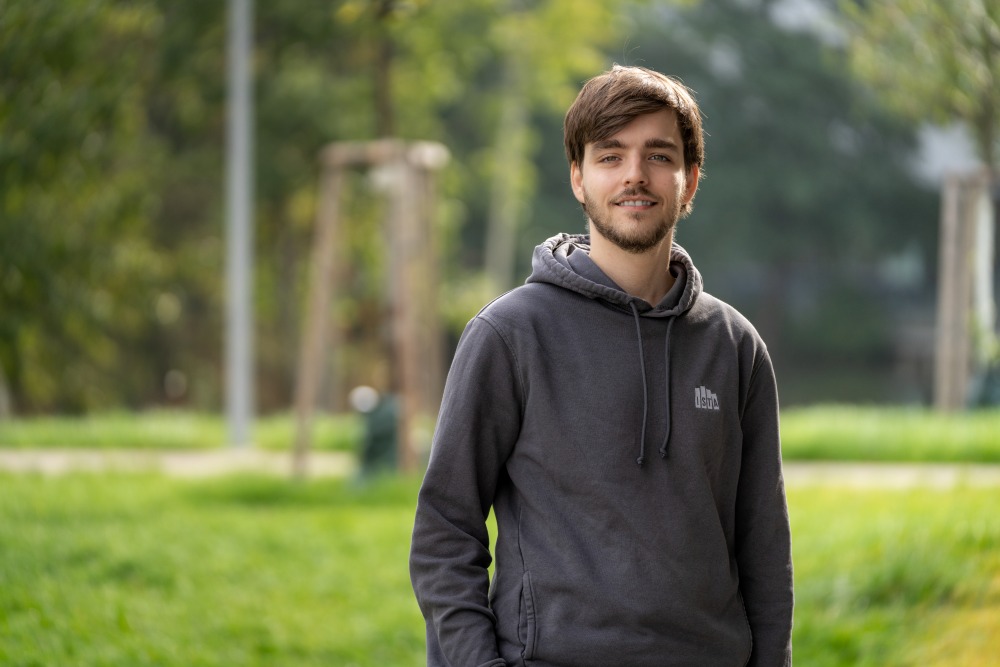
“It means a lot to see my work recognized, and it encourages me to strive for even higher quality research,” says Kalinin.
A highly competitive fellowship
Cadei, Chen and Kalinin are among 148 new fellows across 38 countries supported this year through $13 million in funding from Google.org.
To be considered for a fellowship, candidates must be nominated by their institutions, with eligible universities or institutes in Europe and several other parts of the world limited to three a year.
Two other ISTA PhD students received fellowships in previous calls.
Since 2009, the Google PhD Fellowship Program has supported more than 1,100 graduate students worldwide.


