December 30, 2025
Five Faculty Promotions in 2025
Johann Danzl, Xiaoqi Feng, Stefan Freunberger, Maximilian Jösch & Marco Mondelli
Research promise and excellence are the only criteria for faculty appointments at the Institute of Science and Technology Austria (ISTA). Following a successful tenure evaluation, assistant professors are promoted directly to full professors without an intermediate step as associate professors. This year, five faculty promotions took effect in areas covering optical imaging, neuroscience, plant biology, evolution, chemistry, materials science, data science, and machine learning. We congratulate the recently-promoted professors on this significant career milestone!
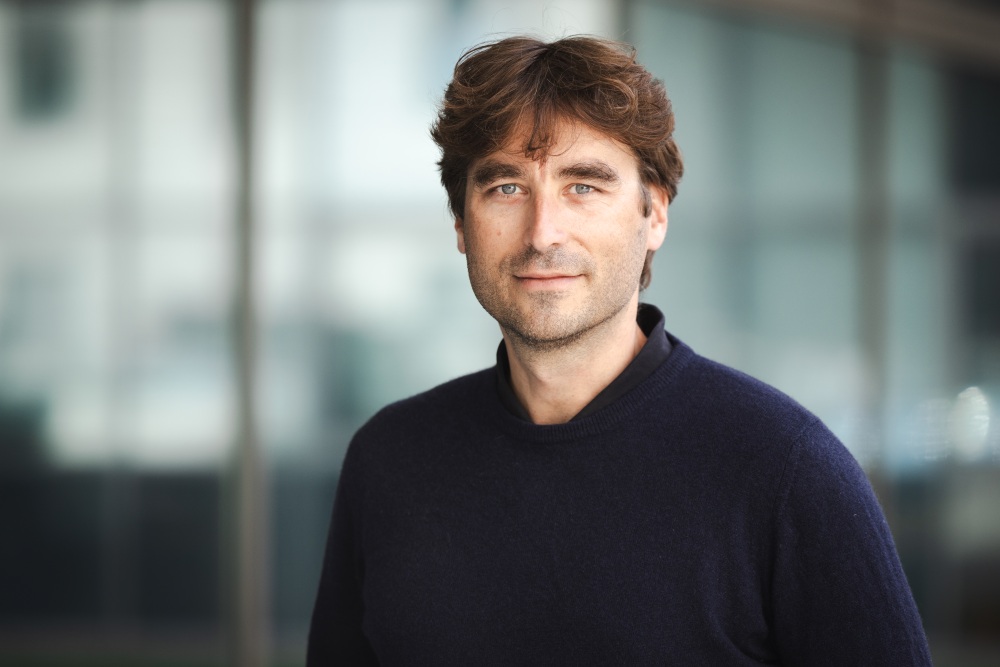
Johann Danzl: Pushing the limits of optical imaging techniques for biology
Originally from Tyrol, Austria, Danzl began his academic career at the University of Innsbruck by pursuing both medical studies and experimental physics. He earned an MD degree in 2005 and a PhD in experimental quantum physics in 2010. He undertook postgraduate research at the Max Planck Institute for Biophysical Chemistry in Göttingen, where he worked on nanoscale fluorescence imaging. In 2017, Danzl joined ISTA as an assistant professor. Here, he and his group develop and advance optical imaging technologies, integrating them with data analysis and biological measurements using a multimodal approach. Since 2024, he has been part of the FWF Cluster of Excellence “Neuronal Circuits in Health and Disease”. Danzl was promoted to a senior faculty position at ISTA in April and received an ERC Advanced Grant in June 2025.
This year, the Danzl group developed LICONN in collaboration with Google Research. This method, published in Nature, reconstructs brain tissue by combining hydrogel tissue expansion with off-the-shelf light microscopes and AI-aided image analysis. By embedding the brain tissue in a hydrogel, a three-dimensional polymer network that takes up water, the team can expand the sample in a highly controlled manner. The technique maintains the relative spatial arrangements of the tissue’s structures with extremely high fidelity while achieving extraordinary resolution at the nanometer scale.
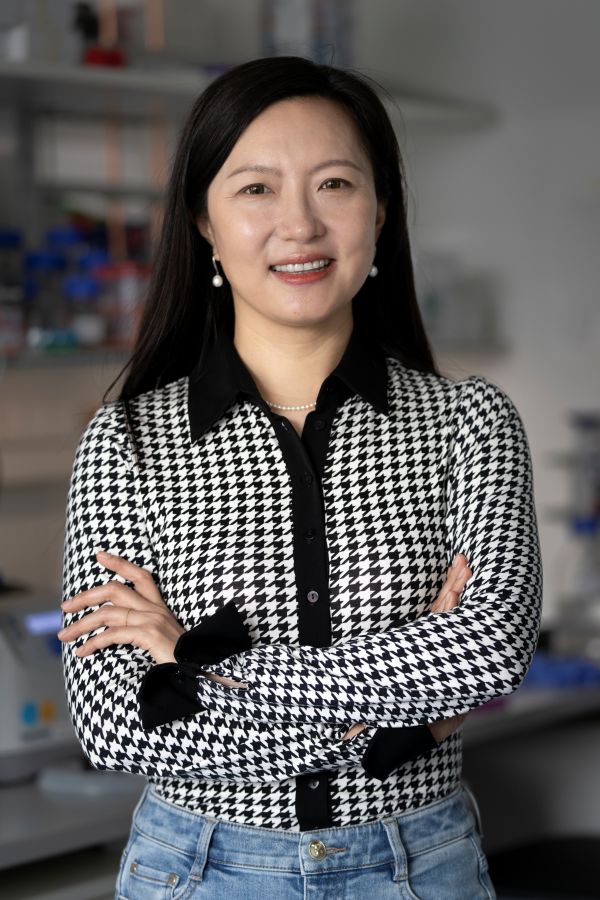
Xiaoqi Feng: How did plants evolve sexual reproduction?
The Chinese researcher received her D.Phil in plant sciences from the University of Oxford in 2010. She completed her postdoctoral research at the University of California, Berkeley in 2014, before becoming a Group Leader at the John Innes Centre, UK. Since joining ISTA in 2023, Feng has made significant strides in understanding sperm nuclear condensation and developmental regulation. Her research utilizes plant germlines as a model to explore the core principles of epigenetic regulation and sexual reproduction that apply to plants and animals. She has received multiple awards, including the EMBO Young Investigator Award, as well as funding through an ERC Starting Grant and an ERC Consolidator Grant. Feng’s promotion to the rank of professor took effect in May.
Feng and her group discovered that a special DNA marker, once thought to exist only in microbes, plays a vital role in sperm development in liverworts, one of the oldest plant forms to colonize land. Published this year in Cell, this work is the first conclusive evidence of 4mC outside the realm of microbes. It could open up new applications in biotechnology by enabling gene regulation without altering the underlying DNA sequence. This finding was highlighted in a video for this year’s Fascination of Plants Day.
Stefan Freunberger: Harnessing life’s electron transfer reactions for clean energy storage
With roots in Lower Austria, Freunberger studied chemistry at the Vienna University of Technology (TU Wien), where he received his master’s in 2002. He pursued his graduate research at ETH Zurich, where he earned his PhD in 2007. He was a postdoc at ETH Zurich and the University of St. Andrews, UK. In 2012, he returned to Austria to work as a senior scientist at TU Graz, where he received an ERC Starting Grant. In 2020, Freunberger was appointed as an assistant professor at ISTA. He and his group specialize in materials electrochemistry, focusing on applications in energy storage devices, such as rechargeable batteries. Their approach combines advanced material synthesis, characterization, and applications in electrochemical systems. Since 2023, Freunberger has been one of the Board Members of the FWF Cluster of Excellence “Materials for Energy Conversion and Storage”. This April, his promotion to professor became effective.

This year, the Freunberger group has unveiled pivotal insights into the redox chemistry of oxygen and reactive oxygen species (ROS). While some ROS play essential roles in cell signaling, the particularly harmful singlet oxygen damages cells and degrades batteries. For the first time, the team has uncovered a way to tune it. Their work, published in Nature, could have broad applications, particularly in energy storage processes.
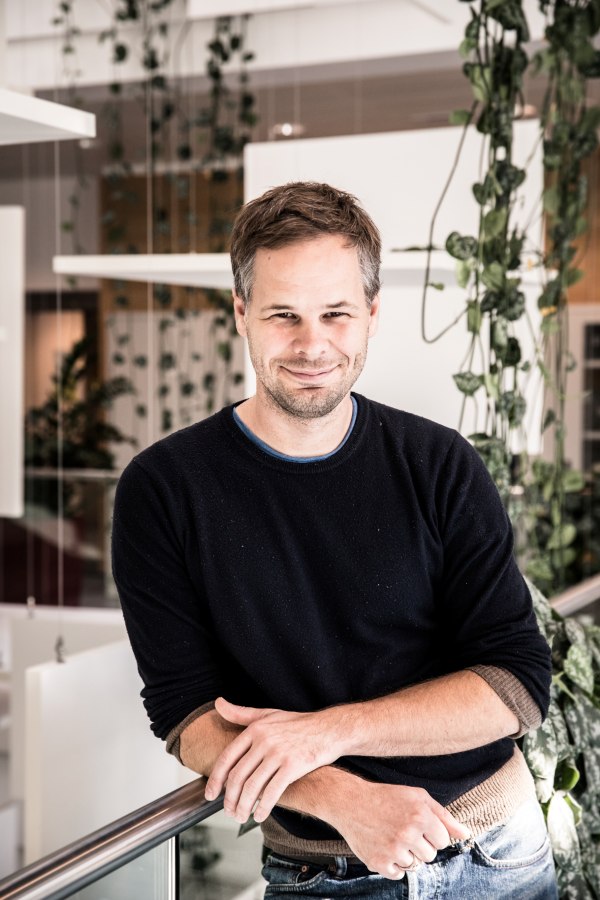
Maximilian Jösch: What is the neuronal basis of our innate behaviors?
The researcher grew up in Chile, where he initially studied astronomy and physics at the Pontificia Universidad Católica, Santiago. Jösch then moved to Germany to study biochemistry and completed his graduate studies in 2009 at the Max Planck Institute for Neurobiology in Martinsried and at Ludwig-Maximilians University, Munich. He was a postdoctoral researcher at Harvard University before joining ISTA in 2017 as an assistant professor. Jösch’s research aims to elucidate the processes by which animals extract relevant information from their environment to adapt their behavior in a context-dependent manner. Together with his group, he uses sensorimotor transformation as a platform and aims to bridge computational, algorithmic, and biophysical approaches. Since joining ISTA, Jösch received an ERC Starting Grant and an ERC Consolidator Grant, and has been part of the FWF Cluster of Excellence “Neuronal Circuits in Health and Disease” since 2024. He joined the senior members of the ISTA faculty in January.
This year, researchers from the Jösch group uncovered a ‘video optimization’ mechanism that allows the brain to unblur vision during movement. This mechanism takes place in the “ventral lateral geniculate nucleus” (vLGN), which the team identified in mice using a custom two-photon microscope with a virtual reality setup. This brain region predicts and minimizes how movements distort the visual signal, helping us differentiate our own motion from the surrounding environment. The mechanism is similar to an onboard camera in a Formula 1 race car, which uses shorter exposure times to reduce blurriness caused by the car’s high speed. The findings were published in Nature Neuroscience.
Marco Mondelli: Addressing complex inference problems to exploit giant datasets
Mondelli, originally from Italy, began his academic journey with a bachelor’s degree in telecommunications engineering from the University of Pisa in 2010. In 2016, he obtained his PhD in computer and communication sciences from the École Polytechnique Fédérale de Lausanne (EPFL), Switzerland. Mondelli was then a postdoctoral fellow at Stanford University before joining ISTA as an assistant professor in 2019. His research agenda encompasses data science, machine learning, and coding theory, with a long-term goal of developing solid inference methods in information theory to solve data-driven challenges in both engineering and the natural sciences. He is one of the core faculty members of the ELLIS Unit Vienna, a locally organized unit of the European Laboratory for Learning and Intelligent Systems (ELLIS). In 2024, Mondelli received an ERC Starting Grant and became part of the FWF Cluster of Excellence “Bilateral AI”. His promotion to the rank of professor took effect in February.
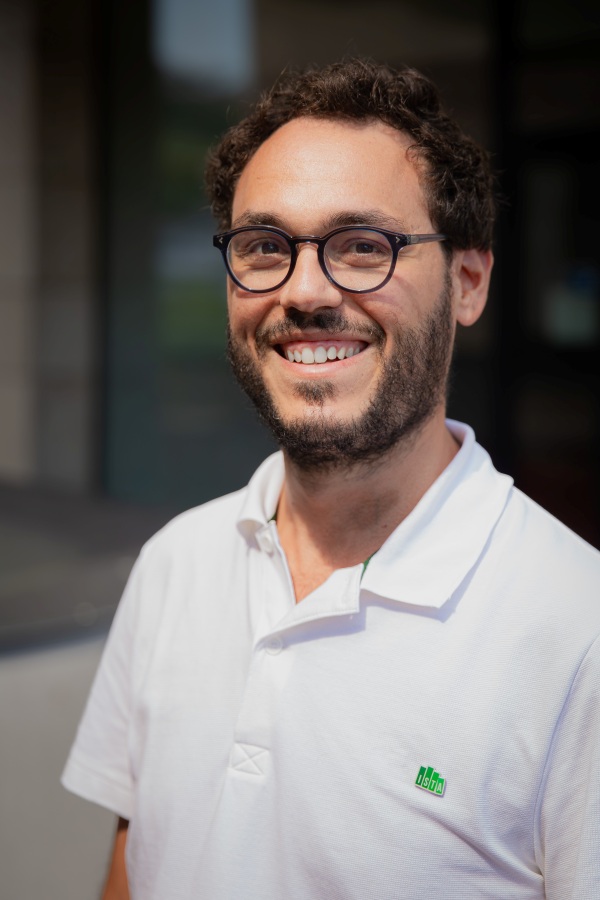
Among this year’s advancements in AI research, Mondelli teamed up with PhD student Simone Bombari to address essential questions in deep learning and data privacy. Namely, can privacy be guaranteed as deep learning training models grow larger? And does guaranteed privacy come at a higher performance cost? Challenging the conventional wisdom in the field, the team demonstrated that increasing the number of parameters in a training model does not necessarily lead to a higher ‘cost’ in terms of privacy. Their work, “Privacy for free in the overparameterized regime,” was published in PNAS.